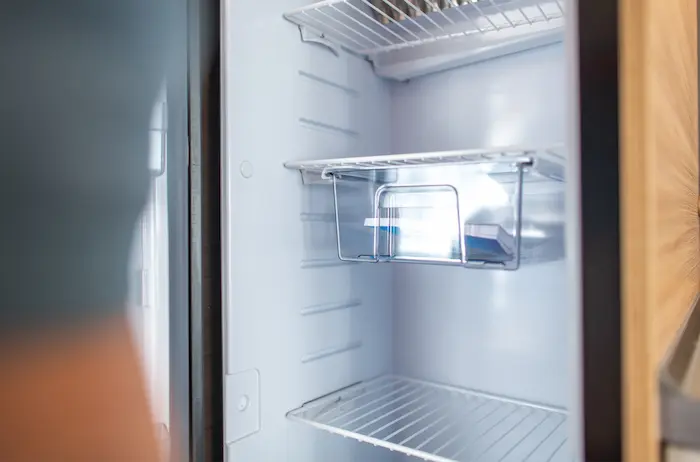
If you live in a caravan or are planning a caravan journey, keeping your food fresh becomes crucial, unlike in a regular household. Thus, a refrigerator is an indispensable feature of any caravan. But which iceboxes is the most appropriate for specific conditions and caravan types? This article compiles the essentials for you.
Contents
How Do I Find the Right Refrigerator for My Caravan?
Though many refrigerator types would function in a caravan given enough electric power, domestic electric iceboxes are ideal for those who live full-time in their caravan or those traveling in large groups. If your vehicle is not equipped to handle such a power-intensive appliance, it won’t be of much use. For short trips or those sharing a caravan with just one other person, a large domestic cooler might be overkill.
Power requirements are critical when considering domestic coolers for caravans. In some cases, a generator might be necessary.
What are the available options for caravan refrigerators? Broadly, there are two primary classes of iceboxes based on the cooling process they use:
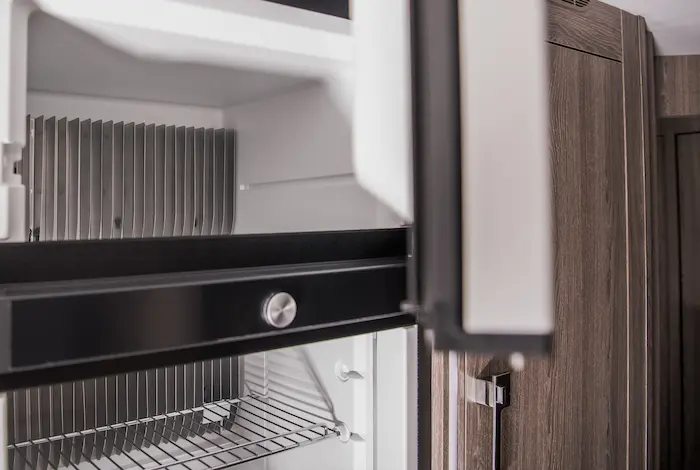
Absorption Refrigerators
For gas absorption iceboxes, you need to choose between a two-way model (running on propane or 120V AC electricity) or a three-way model (also running on propane/120V AC but with an additional 12V DC option).
Compressor Refrigerators
Compressor refrigerators typically run on 120V AC power and are commonly known as household iceboxes. They’ve been gaining popularity for caravans in recent years. However, their need for 120V AC power can be a downside, requiring external power sources. Either you need to run a generator or have ample battery power to operate the cooler using an inverter. Keeping your inverter on all the time can be power-intensive, with such 120V AC refrigerators generally consuming 130-150 amp-hours over 24 hours.
The latest addition to caravan refrigerator options is the 12V DC compressor iceboxes. It operates similarly to the 120V AC model but without the need for conversion, eliminating the inefficiencies in power conversion.
Consider these features to select the best cooler for your needs. The ideal iceboxes will cater to your lifestyle, dietary habits, and the time you spend in your caravan.
Pros and Cons of Absorption Refrigerators
The significant advantage of absorption iceboxes is their ability to run on liquid propane gas, making off-grid camping simple and relatively worry-free. Another benefit is their efficient insulation. As long as you don’t frequently open them, they can keep your food cold for hours.
However, they have some drawbacks. They tend to be smaller in size, which might not be an issue unless traveling with a large group. Most importantly, absorption refrigerators may not cool as efficiently as compressor-based ones. It’s generally expected to cool about 40 degrees below ambient temperature. This is sufficient until you’re camping in the summer heat or parking your caravan in direct sunlight. Ways to mitigate this include parking in the shade or adding fans behind the iceboxes to enhance the efficiency of the gas absorption cooling cycle.
Pros and Cons of 120V AC Household Refrigerators
Household iceboxes operate on 120V AC electricity, so when using one in a caravan, you’ll need to convert the caravan’s 12V DC power using an inverter.
Their primary advantage is their size and consistent cooling efficiency. Those traveling with large groups or living full-time in a caravan might prefer this type. Filling up the fridge and freezer with ample food, especially in remote areas, ensures food preservation, making travels more enjoyable. The iceboxes will largely maintain its internal temperature no matter how often you open it.
However, there are drawbacks. They are not designed for mobile use, so they don’t have the door locking mechanisms inherent in caravan absorption iceboxes. Modifications might be necessary to ensure the doors stay shut while the caravan is in motion. Additionally, ensuring the appliance fits inside your caravan, and the challenge of removing it if it breaks down, can be cumbersome. The significant power requirement is another considerable disadvantage. You need to be sure your energy source can handle the demand.
- Doing Laundry in a Camper With a Washing Machine
- Choosing a Camping Tent
- Rv Maintenance Steps
- Caravan Kitchen: Delicious Recipes on the Road
- Sleeping Bag Selection
Follow us on social media